Critique of Phil Illy's Autoheterosexual
If you are a natal male with Gender Dysphoria, it is more likely than not that you are of the Autogynephilic etiology. For this reason, I recommend reading Phil Illy’s Autoheterosexual, as it provides an accurate, neutral, and digestible description of autogynephilia. That being said, the book is not without its flaws. One thing Phil has received criticism for is his description of autoandrophilia, which is disputed by sex researchers such as Michael Bailey. Below are some critiques of statements found in Autoheterosexual, as they pertain to autoandrophilia.
Proponents of Autoandrophilia Theory run into problems when they attempt to force female-to-male transsexuality through the framework of male sexuality. Instead, FTM transsexuality must be understood through the framework of female sexuality.

A Sex Difference in the Specificity of Sexual Arousal
A key difference between male and female sexuality is the prevalence of bisexuality. Male sexuality is bimodally distributed, where it is more likely for a male to be exclusively heterosexual or homosexual instead of bisexual. Conversely, female sexuality is not bimodally distributed and bisexuality is more common, to the extent that it has been theorized that females might be “the more bisexual sex.”
Autogynephilic males sometimes experience pseudobisexuality, a phenomenon that is confused with but distinct from bisexuality proper. This accounts for a large number of bisexual-identified MTFs. Because this is a feature of male sexuality, there is no reason to assume this explains bisexual identity in FTMs. Instead, homosexual FTMs and nonhomosexual FTMs both display bisexual arousal patterns, even after being treated with testosterone. In research, homosexual FTMs are not defined as those with an exclusive sexual interest in women (Kinsey = 6) but a clear sexual preference for women (Kinsey > 4). In other words, FTM HSTS can be a little bisexual.
In Autoheterosexual, Phil claims that “about three out of four” FTMs are autoandrophilic. This is based on data from the 2015 US Trans Survey, where 23% of FTMs identified their sexual orientation as “straight” while 77% did not. While it is not unreasonable to suppose that all nonhomosexual MTFs are autosexual, the same cannot be said for FTMs. Without Kinsey or Klein grid scores, it is impossible to sort the bisexual FTMs by etiology.
Furthermore, it is doubtful that all nonhomosexual FTMs are autoandrophiles. Rather than a paraphilia, Gender Dysphoria in nonhomosexual females might be caused by a body image disorder that spreads through social contagion. This is supported by the theory of Rapid Onset Gender Dysphoria, and the own-body perception/self-referential thinking hypothesis.
Another critique of Autoheterosexual is the assumption that body image disorders are rooted in autosexuality. Phil describes autophylophilic transracialism as transracial identity that develops “as a result of autosexual attraction to being that race”, citing Oli London as an example. While it is undeniable that autophylophilic transracialism can occur in AGPs, I doubt this is the case for London, a person who has suffered from Body Dysmorphia since he was an adolescent. Unless a person is known to be an autogynephile, it is more sensible to assume their transracial ideation is born out of a body image disorder instead of a paraphilia.
Additionally, male identity in natal females can arise as a product of male-dominated culture, as demonstrated by the Albanian burrneshat.
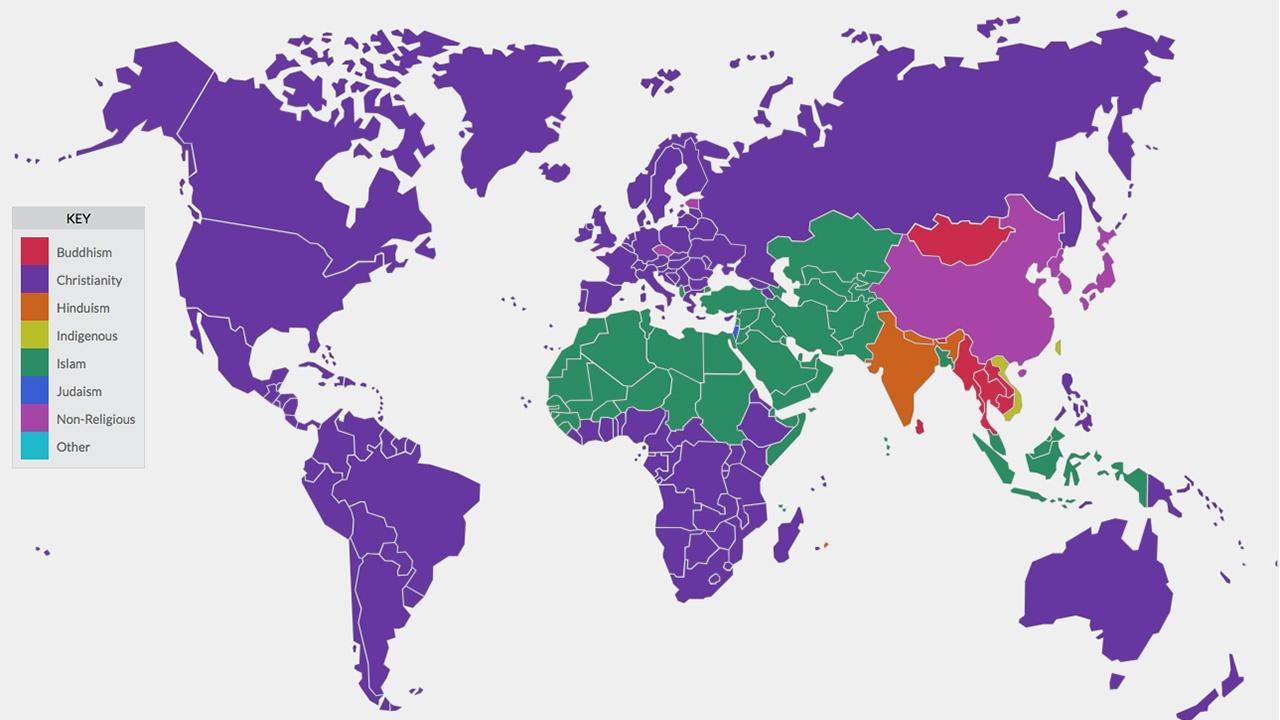
Above is a map that shows the dominant religion in countries across the world. Christianity, Islam, and Judaism all teach that women are inferior to men. In East Asia, where Buddhism and atheism dominate, the culture is deeply influenced by Confucianism, which also teaches male superiority. Hinduism is the dominant religion in the Indian subcontinent, which lags behind in terms of the Gender Inequality Index. Women raised to believe that men are superior might decide to transition for reasons unrelated to sexuality.
In summary, there are alternative theories that explain nonhomosexual FTMs better than Autoandrophilia Theory. Furthermore, the own-body perception/self-referential thinking hypothesis challenges the assumption that nonhomosexual transsexualism is rooted in autosexuality, as opposed to a body image disorder. Although it is plausible that some FTMs are autoandrophiles, it is probably not as common as Phil purports.
Related Blog Posts
Is “Bisexual” a Meaningful Descriptor for Trans Men?
Interesting Research on FTM Adolescents
The "Sworn Virgins" of Albania
References
Chivers, M. L., Rieger, G., Latty, E., & Bailey, J. M. (2004). A Sex Difference in the Specificity of Sexual Arousal. Psychological Science, 15(11), 736-744. https://doi.org/10.1111/j.0956-7976.2004.00750.x (Original work published 2004)
Bailey, J.M. (2009). What is Sexual Orientation and Do Women Have One?. In: Hope, D.A. (eds) Contemporary Perspectives on Lesbian, Gay, and Bisexual Identities. Nebraska Symposium on Motivation, vol 54. Springer, New York, NY. https://doi.org/10.1007/978-0-387-09556-1_3
Bailey, J. M., Vasey, P. L., Diamond, L. M., Breedlove, S. M., Vilain, E., & Epprecht, M. (2016). Sexual Orientation, Controversy, and Science. Psychological Science in the Public Interest, 17(2), 45-101. https://doi.org/10.1177/1529100616637616 (Original work published 2016)
Morandini, J. S., Hsu, K. J., & Rudd, S. (2025). Autogynephilia in Some Bisexual Cisgender Men. Archives of Sexual Behavior, 1-14. https://doi.org/10.1007/s10508-025-03166-7
Raines, J., Holmes, L., Watts-Overall, T. M., Slettevold, E., Gruia, D. C., Orbell, S., & Rieger, G. (2021). Patterns of Genital Sexual Arousal in Transgender Men. Psychological Science, 32(4), 485-495. https://doi.org/10.1177/0956797620971654 (Original work published 2021)
James, S. E., Herman, J. L., Rankin, S., Keisling, M., Mottet, L., & Anafi, M. (2016). The Report of the 2015 U.S. Transgender Survey. Washington, DC: National Center for Transgender Equality. https://transequality.org/sites/default/files/docs/usts/USTS-Full-Report-Dec17.pdf
Skorska MN, Lobaugh NJ, Lombardo MV, van Bruggen N, Chavez S, Thurston LT, Aitken M, Zucker KJ, Chakravarty MM, Lai M-C and VanderLaan DP (2022) Inter-Network Brain Functional Connectivity in Adolescents Assigned Female at Birth Who Experience Gender Dysphoria. Front. Endocrinol. 13:903058. doi: 10.3389/fendo.2022.903058


Comments
Post a Comment